
Buying Rudraksha online can be confusing, particularly for first-time customers. Different websites offer beads with varying Mukhi counts, origins, dimensions and prices. Some products also come with laboratory certificates or claims of X-ray verification.
But how can a buyer evaluate these details?
Understanding the basic characteristics of Rudraksha, knowing what documentation can establish and asking the right questions can help customers make more informed purchasing decisions.
Rudraksha is traditionally associated with the seeds of the tree botanically identified as Elaeocarpus ganitrus. Its cultural and spiritual importance has made it a widely recognised item in Hindu traditions.
Brands such as Mauhurtika Rudraksha provide online collections and product information for customers exploring different varieties.
This guide explains the important checks buyers should consider before purchasing.
1. Understand What Rudraksha Is
Rudraksha is the dried seed or bead obtained from the fruit of Elaeocarpus ganitrus, a tree belonging to the Elaeocarpaceae family.
A scientific study published in the Indian Journal of Pharmaceutical Sciences describes the structure and microscopic characteristics of Rudraksha material.
The research discusses features such as its hard endocarp, seed coat and internal cellular structure.
Scientific reference:
Pharmacognostic and Antifungal Investigations of Elaeocarpus ganitrus – Indian Journal of Pharmaceutical Sciences.
This botanical understanding is useful because it separates the physical identity of the seed from traditional interpretations associated with wearing it.
2. What Does Mukhi Mean?
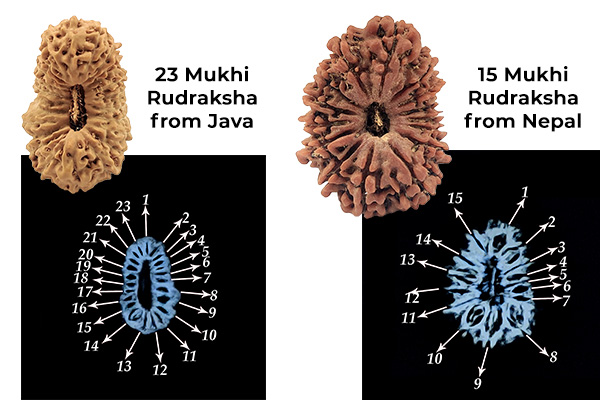
The word Mukhi refers to the natural lines or clefts visible on the surface of a Rudraksha bead.
These lines are traditionally used to classify Rudraksha varieties.
For example:
- 1 Mukhi Rudraksha
- 2 Mukhi Rudraksha
- 3 Mukhi Rudraksha
- 5 Mukhi Rudraksha
- 7 Mukhi Rudraksha
- 9 Mukhi Rudraksha
- 11 Mukhi Rudraksha
- 14 Mukhi Rudraksha
Higher Mukhi varieties are also available in the market, although availability and rarity can vary.
A buyer should not rely only on a seller’s product title. The natural surface characteristics, product photographs and relevant examination should be considered together.
Explore the Mauhurtika Rudraksha collection by Mukhi to see different listed varieties.
3. Examine the Natural Surface and Structure
A natural Rudraksha bead generally has an irregular, textured surface with visible ridges and furrows.
When examining a product, buyers should consider:
- Whether the visible Mukhi lines are clearly shown.
- Whether the bead has natural surface variations.
- Whether photographs show the actual product or only a representative image.
- Whether the bead has visible cracks or damage.
- Whether the top and bottom portions are visible.
Natural variation is expected. Two beads of the same Mukhi count may not look identical.
However, appearance alone should not be treated as conclusive proof of authenticity.
4. What Is X-Ray Verification?
X-ray imaging can be used to examine the internal structure of a Rudraksha bead without cutting it open.
Researchers have used X-ray imaging to study the endocarp, seed and internal structure of Elaeocarpus ganitrus.
A 2021 research paper titled “Morphometric Characteristics of Endocarp, Seed and Embryo of Elaeocarpus ganitrus, the Indian Rudraksha Plant” discusses the use of X-ray imaging in examining seed presence and internal characteristics.
Research reference:
Journal of Non-Timber Forest Products – Morphometric Characteristics of Elaeocarpus ganitrus.
For a customer, an X-ray report may provide additional information about internal structure. However, an X-ray image should not automatically be interpreted as proof of every claim about origin, age, spiritual properties or market value.
The scope of the examination matters.
5. Understand Laboratory Certification
Laboratory documentation can provide additional confidence when buying a valuable Rudraksha.
However, customers should understand exactly what a particular certificate verifies.
Before purchasing, check:
- Laboratory name.
- Report or certificate number.
- Product or specimen identification.
- Mukhi count mentioned in the report.
- Examination method, if specified.
- Whether the report is linked to the actual bead being sold.
- Whether the laboratory provides a verification facility.
A certificate should not be treated as a universal guarantee of every possible characteristic.
For example, a report confirming certain physical characteristics does not necessarily establish the geographical origin, historical age or spiritual effects of a bead.
Mauhurtika Rudraksha provides information about its certification and verification approach on its Rudraksha Certificate page.
Buyers should review the actual documentation supplied with their selected product.
6. Nepali vs Indonesian Rudraksha
Rudraksha is commercially available from different geographical origins, including Nepal and Indonesia.
Customers often compare these varieties based on:
- Bead dimensions.
- Overall appearance.
- Surface texture.
- Mukhi count.
- Product availability.
- Price.
- Laboratory documentation.
Nepali Rudraksha is often associated in the market with larger bead sizes, while Indonesian or Java Rudraksha is commonly available in smaller sizes. These are general market observations, not rules that apply to every bead.
A smaller bead is not automatically inferior, and a larger bead is not automatically more authentic.
The actual characteristics of the individual product matter more than general assumptions.
7. Questions to Ask Before Buying Rudraksha Online
Before placing an order, buyers can ask the seller:
- Is the bead Nepali or Indonesian?
- What is its approximate size in millimetres?
- Is the Mukhi count verified?
- Is a product-specific certificate available?
- Is an X-ray image available?
- Does the certificate correspond to the actual product?
- What is included with the purchase?
- What are the shipping and replacement conditions?
These questions help reduce confusion and create a more transparent buying experience.
8. Why Choose a Brand That Provides Product Information?
When buying spiritual products online, product information and customer support are important.
Mauhurtika Rudraksha is an Indore-based Indian D2C brand operating under Medhaavi Digital LLP.
Its website features Nepali and Indonesian Rudraksha collections, individual beads, malas, pendants and special combinations.
Customers can explore product specifications and contact the brand for additional information before purchasing.
Visit:
Conclusion
Identifying authentic Rudraksha requires more than looking at a photograph or comparing prices.
Buyers should examine natural surface characteristics, understand Mukhi classification, review relevant laboratory documentation and ask clear questions about origin and product specifications.
X-ray imaging and laboratory reports can provide useful additional information, but their actual scope must be understood.
An informed buyer is better positioned to select a Rudraksha based on personal preferences, traditional practices and available product evidence.
Explore Rudraksha collections and product information at Mauhurtika Rudraksha.
Disclaimer: Traditional spiritual beliefs are described for cultural and educational purposes. Rudraksha should not be considered a substitute for medical advice or treatment.