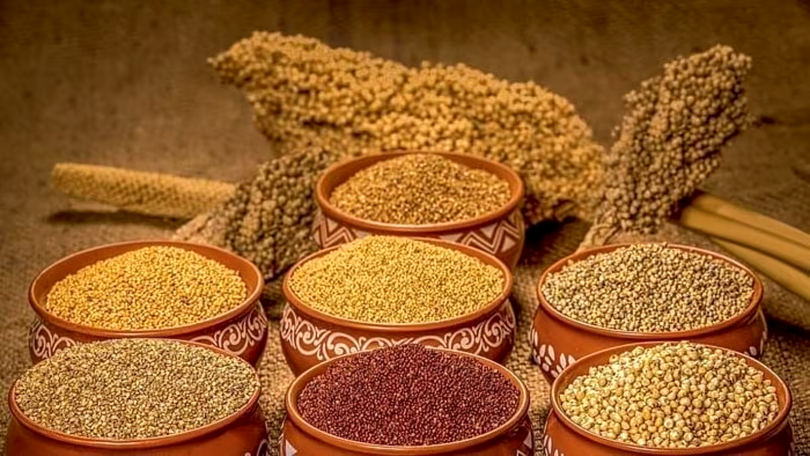

Somewhere in Rajasthan, a farmer stands in his field and stares at the barren soil where his grandfather used to grow bajra and other millets in India. That bajra remains thick, golden stalks, and barely needs any water. While today, people get paid to grow wheat, in reality, wheat needs four times the water, and there is a high chance of soil getting depleted.
This isn’t the case with a few farmers. Across India, from Maharashtra to Gujarat, from Madhya Pradesh to Uttar Pradesh, millions of farmers find themselves trapped in a situation where they need to abandon the old grains like jowar, bajra, ragi.
The good news is: the nutrition revolution is on. After decades of being dismissed as “poor man’s food” and pushed to the edge of the modern diet, jowar-atta and bajra are returning to Indian tables.
Why Millets are Making a Comeback?
To know that, you first need to understand why they disappeared.
A few years ago, millets were everywhere. Jowar and bajra were not delicacies. They were diet foundations. The main breakfast used to be a bajra roti with jaggery, while some used to consume owarbhakri with pickles and dal.
The Green Revolution entered the Indian agricultural policy and made a decisive bet on wheat and rice. Why? They are easier to mass produce, easier to store, and easier to distribute through a public distribution system. And, millets weren’t profitable enough for large agribusiness. So gradually, they vanished.
After decades, the yoga enthusiasts, the gym-goers, the people reading nutrition research online realized that everything they thought was ‘healthy’ was actually not, even though farmers have realized that millets could grow with less water, less fertilizer, less intervention, and most importantly, the health benefits of millets.
| Research Shows 📚: Various research institutions like the National Institute of Nutrition(NIN) and the Indian Council of Medical Research (ICMR) published studies where they mentioned: “the grains India had abandoned were actually nutritional powerhouses”. |
Hence, this is why millets are popular again in India.
Comparative Nutritional Overview of Jowa, Bajra, or Wheat
Let’s not just talk the talk, here are the real differentiators (metrics) that will tell you how they actually got a title of “superfood” and why they deserve to be on every Indian’s plate:
| Metrics | Jowar (Sorghum) | Bajra (Pearl Millet) | Wheat (White) |
| Protein per 100g | 11g | 11.78g | 10-11g |
| Dietary Fiber per 100g | 7g | 11.57g | 2-3g |
| Glycemic Index | Low (55-65) | Low (54-68) | High (70-75) |
| Iron Content | 4-5 mg | 8-9 mg | 3-4 mg |
| Water Required | Low (400-500mm) | Low (400-500mm) | High (1000+mm) |
| Gluten Content | Zero | Zero | High (11-13%) |
| Antioxidants | High (polyphenols) | High | Low |
Jowar vs. Bajra Nutrition and Health Benefits
Jowar and bajra millets in India are sometimes grouped together, but they are two different grains with distinct nutrition profiles and different ideal uses. However, you should be familiar with the differences if you want to include them strategically in your diet.
On that note, here are jowar and bajra benefits:
- Jowar (Sorghum):
Jowar is typically gentle on the body. With 11g of protein and 7g of fiber per 100g, it is balanced and lighter on digestion. Plus, they contain antioxidants, particularly polyphenols that fight inflammation and cellular aging. In simple terms, it fights with nasty cell-damaging things floating inside your body. Eating jowar roti gives humans a steady energy release, prevents their blood sugar spikes, and helps with weight loss.
Fact 😮: Jowar benefits for weight loss are possible by its high fiber and protein content, which creates visceral satiety, and you end up feeling fuller.
- Bajra (Pearl Millet):
Unlike jowar, bajra is quite thicker and more nutrient-dense. To give you a rough idea, it contains 11.78g of protein and 11.57g of dietary fiber per 100g. Also, bajra is rich in iron, which remains helpful to fight anemia and manage the menstrual cycle.
Not done yet…
Bajra also contains phytochemicals and minerals like magnesium, phosphorus, zinc, and manganese. So, if you are worried about high cholesterol or feeling lethargic from bad digestion, bajra has got your back.
Final Words
So here’s the thing, we did not lose jowar and bajra because they were bad for us. We lost them because it was decided that progress meant leaving the roots. Hence, the theory (millets are for “poor people”) has been proven wrong. And surprisingly, the poor people who relied on jowar and bajra millets in India are healthier.
The irony here is: if you switch to jowar or bajra rotis for just one meal a day, you will stop needing chai to stay awake and follow a crash diet to lose weight.
Fortunately, this millet revolution is happening in real kitchens, with real people, not in some fancy nutritionist’s clinic.
So what now? Don’t wait for that perfect time. Start small, see if the results are satisfying, and ultimately choose bajra and jowar for the daily grind.